Emergency Fund vs. Investing: Where Should Your Next $500 Go?
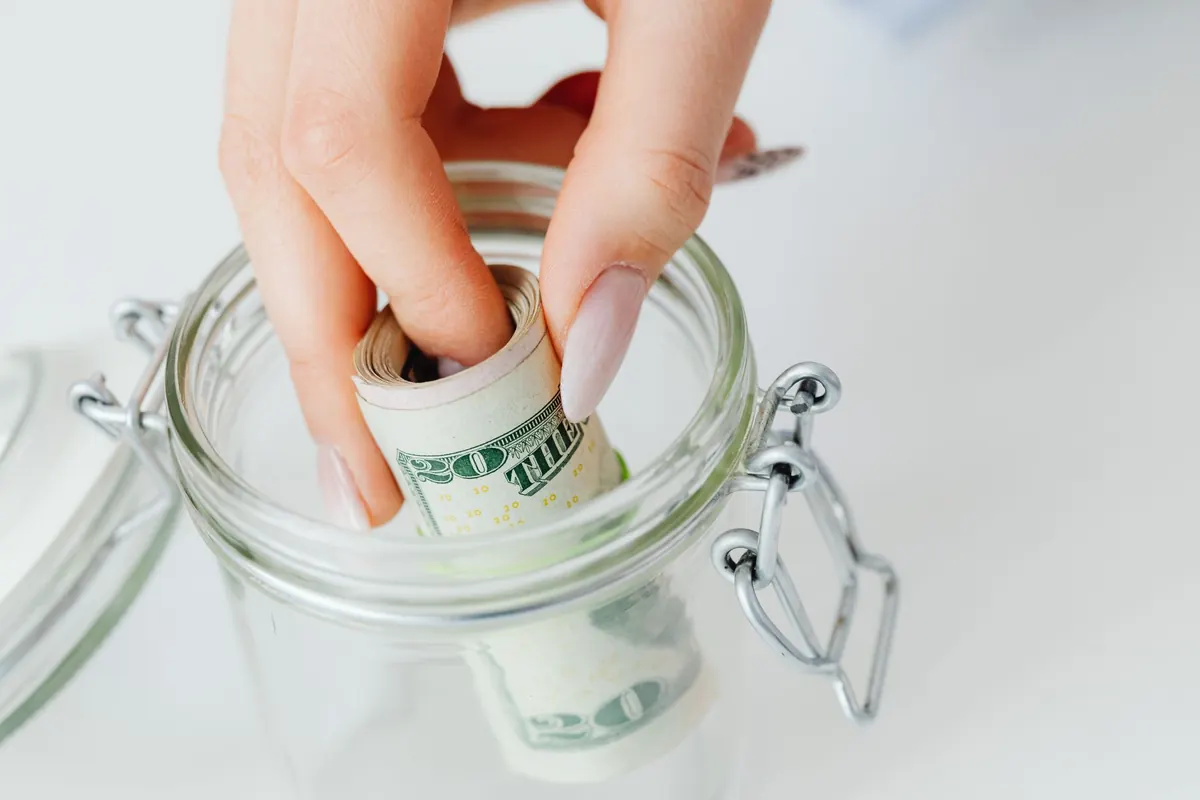
A $500 windfall arrives with a strange kind of pressure. It's too small to change your life and big enough that squandering it feels careless. Pay down the card, top up savings, or buy an index fund? The answer has less to do with the market than with what would happen if you needed that money back in three months.
Here's a way to think it through without pretending anyone can forecast next year's returns.
Money Has a Job Description
Before you decide where $500 goes, name what it's for. Emergency money buys stability; its job is to be there, in full, on the worst day of your month. Investing money buys growth; its job is to compound for years, which means leaving it alone through a bad quarter or a bad year.
Those are different jobs, and the same $500 can't do both well. Cash sits still and slowly loses purchasing power. Investments wobble and, over long stretches, tend to grow. Ask yourself: if my car needed a $900 repair next month, where would that money come from? If the honest answer involves a credit card or a payment plan, your next $500 has a clear assignment.
Think of it as staffing a small business. The emergency fund is the person who answers the phone at 2 a.m.; the investment account is the one building next year's product. Both matter, but you don't move the night-shift operator into product development just because the roadmap looks exciting.
The Case for Keeping Cash
Liquidity is the unglamorous superpower here. Money in a savings account is available within a day, doesn't drop 20% on bad news, and can't force you into a decision you'd rather not make. Federally insured deposit accounts protect your balance up to the coverage limits, so those dollars aren't exposed to market risk.
The trade-off is real: savings rates rise and fall with interest rates, and inflation quietly erodes what each dollar buys. You're paying a small, predictable price for certainty, which is what insurance always costs.
The mistake to avoid is investing money you might need soon. If a $500 investment falls to $400 right when your furnace dies, you sell at the bottom and turn a temporary dip into a permanent loss. Emergency funds exist so you never have to make that trade.
There's a second benefit that rarely gets mentioned: a cash cushion changes your behavior. People with a few thousand dollars set aside are less likely to panic-sell investments during a downturn, because they aren't being forced to raise money in the worst week of the year. Cash isn't only competing with your portfolio — it's protecting it.
The Case for Investing Sooner
Over long periods, a diversified mix of stocks has generally outearned savings accounts by a wide margin, though no one can promise that for any given decade. Time horizon matters more than anything else here.
As a rough rule of thumb, money you'll need within about five years belongs somewhere stable: savings, certificates of deposit, short-term bonds. Money you won't touch for ten years or more is a reasonable candidate for a low-cost, diversified index fund, whether inside a retirement account or a regular brokerage account.
The math is also more forgiving than it feels. Five hundred dollars invested today at an average annual return of, say, 7% becomes roughly $1,000 in about ten years and close to $2,000 in twenty. Nice, but not life-changing — which is exactly why you shouldn't agonize over the timing. The habit of investing consistently matters far more than the head start.
Compounding rewards patience, but investing $500 a few months earlier is not the difference between comfort and hardship. Missing some growth costs little. Being forced to sell during a downturn costs a lot.
Questions That Usually Settle It
Run through these before you move the money. The first "no" or "not sure" is your answer.
- Do I have at least one month of essential expenses in cash?
- If a $1,000 surprise arrived tomorrow, could I cover it without borrowing?
- Am I carrying credit card or other high-interest debt? Paying it off delivers a guaranteed return equal to the interest rate, which no investment can promise.
- Am I contributing enough to my workplace retirement plan to capture the full employer match?
- Will I need this money within three to five years, for a move, a car, or tuition?
- How steady is my income? Freelancers, commission earners, and anyone in a volatile industry need a bigger cushion than someone with a steady paycheck and a working spouse.
- If I lost my job tomorrow, how long would it take to replace that income — three weeks, three months, or longer?
The Middle Path: Split the Difference
The emergency fund versus investing question is usually framed as a fork in the road, but it's really a dial. Plenty of people should do both with the same $500, just not in equal measure.
A workable split for someone with a thin cushion and no high-interest debt might be $400 to savings and $100 invested. The point isn't optimization; it's momentum. You're building the habit of automating both, and both accounts start to feel normal rather than aspirational.
If you already sit on three to six months of expenses and carry no high-interest debt, the dial flips: most or all of the $500 goes to long-term investments. A small slice might go to a sinking fund for a known expense — new tires, a wedding, a laptop — so a predictable cost never has to raid your emergency money.
How Three People Should Use the $500
Thin savings and a credit card balance
Split it. Send $300 to a savings account as a starter buffer and $200 to the card. A small cushion won't cover a real crisis, but it stops ordinary problems from becoming emergencies. And every dollar knocked off a 22% balance is a guaranteed 22% return, which is hard to beat anywhere else.
Steady job, funded emergency fund, no high-interest debt
Invest the whole thing. Add it to a low-cost index fund, set the account to reinvest dividends, and don't look at it until next year. If you haven't captured your full employer match or funded an IRA contribution, route the money there first for the tax advantages.
Self-employed with variable income
Send $400 to savings and $100 to investments, even if the numbers feel arbitrary. Irregular income means irregular expenses and longer gaps between checks, so the cushion does double duty: it smooths your cash flow and keeps you out of debt during a slow quarter. Once you've banked six months of expenses, shift the dial toward growth.
Where to Actually Park the Cash
Not all cash is equal, and a basic savings account is no longer the only option.
- High-yield savings accounts: the default. Fast access, no lock-in, and rates that move with the market.
- Money market accounts or funds: often similar yields, sometimes with check-writing or debit access.
- Certificates of deposit: a fixed rate in exchange for leaving the money alone for a set term. Good for the second layer of your emergency fund — the part you're unlikely to need this month.
- Short-term bond funds: modest growth with some price wobble. Fine for money you won't touch for a year or two, less fine for money you might need Friday.
Many people use a layered approach: one month of expenses in an ordinary checking or savings account, another two to five months in a high-yield account, and anything beyond that in a CD or short-term bond fund. Access comes first; yield comes second.
The Order of Operations
If you remember only one thing, remember the sequence: minimum debt payments, then a starter emergency fund, then the full employer match, then high-interest debt, then a full three-to-six-month emergency fund, then everything else — extra retirement contributions, taxable investing, the fun stuff.
$500 fits neatly into whichever step you're standing on. Find the first unfinished item on that list, put the money there, and stop second-guessing a decision that was never really about the market.